- Healthcare 150
- Posts
- The Value-Based Care Shift Just Accelerated: Here’s What You’re Missing
The Value-Based Care Shift Just Accelerated: Here’s What You’re Missing
This week we’re diving into the value-based healthcare services market, proprietary David H. Crean expert call, value based care enabler competitive landscape, and biotechnology market trends.

Good morning, ! This week we’re diving into the value-based healthcare services market, proprietary David H. Crean expert call, value based care enabler competitive landscape, and biotechnology market trends.
Juniper Square helps PE GPs deliver a modern investor experience without giving up operational control — combining purpose-built software and fund administration services in one connected model. As investor expectations rise and fund structures grow more complex, firms need fewer handoffs, fewer failure points, and a stronger system of record behind every LP interaction. Book a demo →
DATA DIVE
The $5 Trillion Pivot
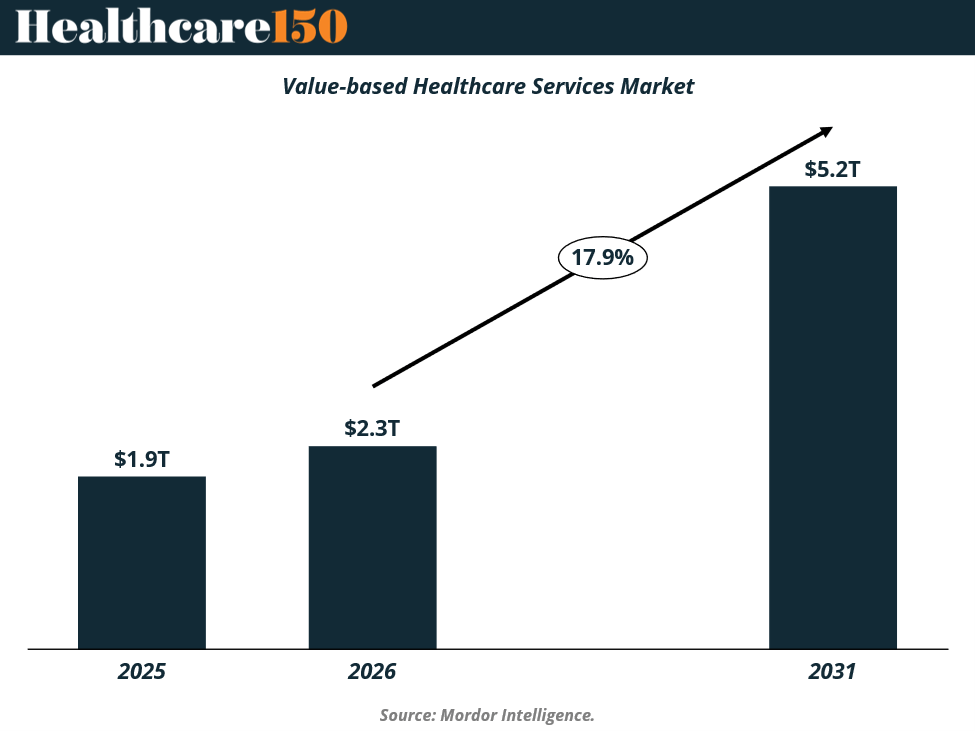
Value-Based Care (VBC) is becoming a main healthcare’s margin engine. The market is projected to scale from $2.3T in 2026 to $5.2T by 2031 (~18% CAGR), signaling a full rewrite of how revenue is generated.
The shift is already well underway: nearly 70% of U.S. payments are tied to outcomes-based models, up from <30% a decade ago. But the real story sits beneath the topline growth.
Spending is migrating away from hospitals (7% of VBC mix) toward self-care (38%) and home health (25%), lower-cost settings where prevention, not procedures, drives economics.
The takeaway: Healthcare margins are moving upstream, into data, coordination, and chronic care management. In VBC, the winners won’t own the most beds — they’ll manage the most lives.
HEALTHTECH CORNER
AI, Capital Concentration, and the HealthTech Barbel
Insights from David Crean from Cardiff Advisory
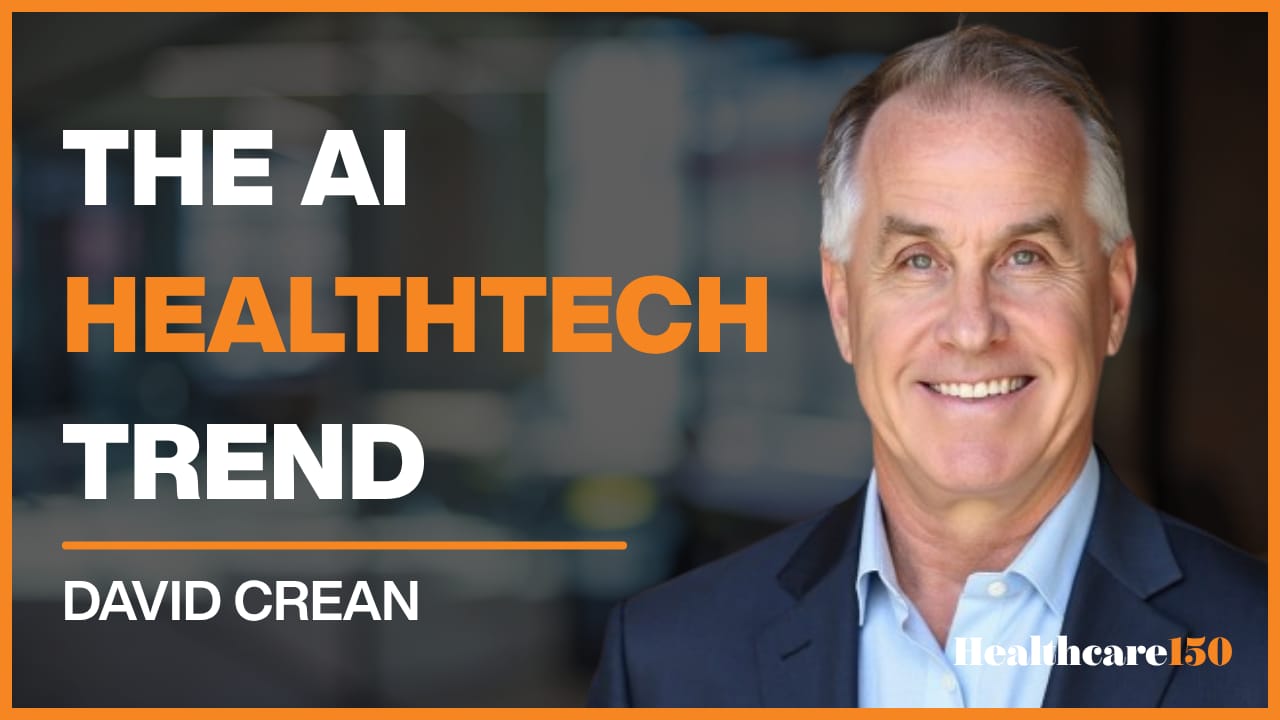
Healthcare VC is no longer evenly distributed—it’s becoming a barbell market. In our expert call, David H. Crean explained how the 2021 funding boom artificially expanded the middle, driven by cheap capital and weak fundamentals. As rates rose, that structure collapsed.
Today, AI is absorbing a disproportionate share of capital—often rationally, given its impact on drug discovery and clinical efficiency. But not all AI is equal. Investors now demand real-world evidence, scalable revenue models, and defensible data moats. (More)
Subscribe to David’s Insights HERE.
PRESENTED BY JUNIPER SQUARE
Stop adding more tools or service providers. Get the best of both with a fund operations partner.

The LP experience can make or break fundraising because investors remember how it feels to work with your firm: onboarding, responsiveness, reporting, and the confidence they have in the numbers.
That experience is only as strong as the operating model behind it. When fund and investor data live across disconnected systems, delays and inconsistencies show up fast.
Juniper Square is the fund operations partner for PE GPs, combining software + fund administration services built on a common data foundation. That means fewer failure points, clearer visibility across investor workflows, and a modern investor experience powered by a single source of truth.
Book a demo to see how a fund operations partner
COMPLIANCE CORNER
New Staffing Standards and Scope of Practice Enforcement Shift Compliance Risks in 2026
Federal staffing mandates for long-term care facilities have been rescinded as of February 2026, with CMS removing numeric minimums like 3.48 nursing hours per resident day. However, state staffing requirements and CMS facility assessments remain critical compliance anchors, creating a patchwork enforcement landscape. Meanwhile, hospitals face emerging pressure from proposed federal legislation and Joint Commission accreditation standards mandating nurse-to-patient ratio minimums and acuity-based staffing adjustments.
Why it matters: Compliance risk is moving beyond long-term care to hospital settings where safe staffing is now a national accreditation imperative, directly tied to patient safety and reimbursement eligibility. Deficiencies may lead to survey citations, financial penalties, or jeopardized accreditation.
Scope of practice disputes have intensified, exemplified by opposition to proposals allowing non-registered nurses to fulfill significant portions of staffing ratios in acute psychiatric hospitals.
Bottom line: Healthcare executives must reassess workforce compliance controls with rigorous documentation of licensure, credentials, and staffing ratios aligned to both state law and accreditor expectations. Staffing is no longer a mere operational concern it is a frontline compliance risk with direct impact on service delivery and federal reimbursement eligibility. (More)
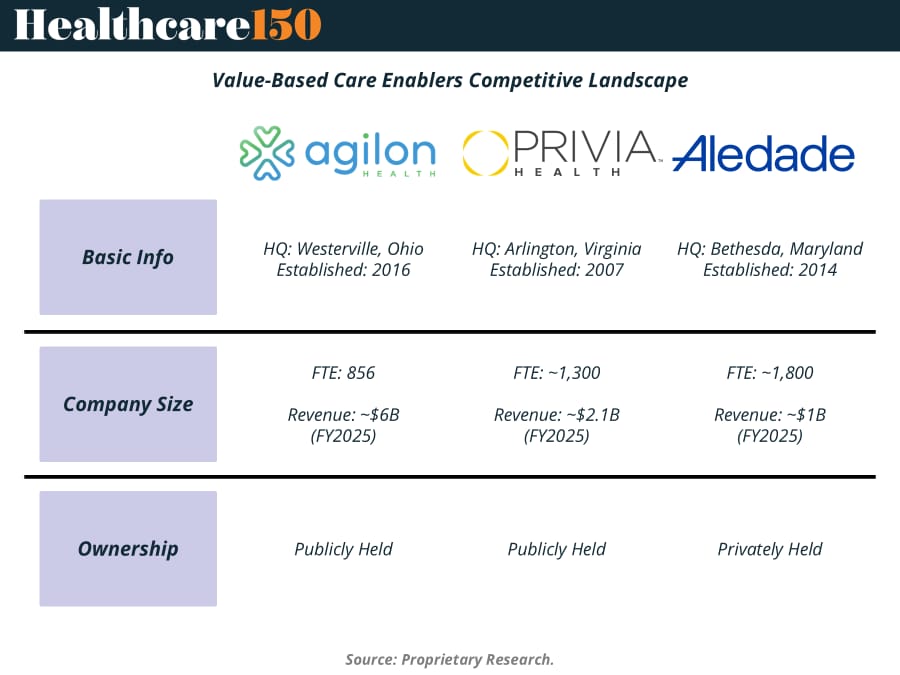
COMPETITIVE LANDSCAPE SNAPSHOT
TREND TO WATCH
AI Becomes Biotech’s Operating System

Biotech is accelerating. The market is projected to scale from $1.77T in 2025 to $5.71T by 2034, a +13.9% CAGR, signaling one of the fastest expansions across Healthcare and Life Sciences Industry sectors.
Across the value chain, AI-driven drug discovery is compressing timelines from years to months, shifting R&D from probabilistic science to data-driven engineering. From molecular prediction to clinical trial design, companies are reducing failure rates in an industry where attrition has historically defined returns.
The implication is structural: biotech is becoming a computational industry. Firms with proprietary datasets, scalable models, and integrated platforms are pulling ahead—while traditional wet-lab-first models risk falling behind on both cost and speed.
For investors, this reframes the opportunity. The edge is no longer just in breakthrough science, but in who owns the intelligence layer powering it. (More)
"Innovation distinguishes between a leader and a follower"
Steve Jobs