- Healthcare 150
- Posts
- $328B in deals, -5% volume: healthcare is concentrating
$328B in deals, -5% volume: healthcare is concentrating
Bigger Checks, Fewer Bets — Healthcare Consolidation Accelerates


Good morning, ! This week we’re unpacking the concentration of healthcare M&A into fewer, higher-conviction bets, the AI barbell reshaping healthtech funding dynamics, how data-driven enforcement is transforming compliance, and the rise of IoMT as healthcare’s next operating system.
Want to advertise in Healthcare 150? Check out our ad platform, here.
Know someone in the healthcare space who should see this? Forward it their way. Here’s the link.
— The Healthcare150 Team
DATA DIVE
Bigger Checks, Sharper Pencils

Healthcare M&A isn’t slowing—it’s concentrating.
The data tells a clean story: deal value jumped 46% in 2025 to $328B, while volume fell 5%. Translation: fewer deals, bigger bets.
The driver? Megadeals. Transactions north of $5B surged from 3 to 11, signaling a return of high-conviction capital.
Underneath, the constraint isn’t opportunity—it’s execution risk. Nearly 30% of respondents cite integration as the top bottleneck, ahead of valuation. Meanwhile, 67% point to financing costs, keeping leverage honest.
Regionally, Asia-Pacific volumes are rising, but the Americas still dominate value, capturing ~two-thirds of global deal dollars.
Bottom line: This is a scale-driven market. Capital is available—but only for assets that can absorb it without breaking.
HEALTHTECH CORNER
The AI Barbell Effect

Healthtech is quietly becoming venture’s safest middle child—if, and only if, it speaks AI. Funding hit $13.8B (+5% YoY), a modest gain that looks heroic next to declines elsewhere. But this isn’t broad-based growth—it’s a barbell market where AI winners take disproportionate share, while everything else fights gravity.
The shift is structural. AI now accounts for ~46% of total healthcare VC, and the definition of a “big round” has moved from $100M to $300M+. Deals like Abridge and Truveta signal that clinical workflows—not just drug discovery—are absorbing serious capital.
The catch: investors now expect capital efficiency + revenue traction by Series B. No AI narrative? Expect a valuation haircut.
Bottom line: Healthtech isn’t growing—it’s concentrating. (More)
PRESENTED BY JUNIPER SQUARE
How one GP modernized operations for a more complex fund structure

As firms expand into new fund structures, increase investor counts, and face heightened reporting expectations, the operating model either scales with them or becomes the constraint.
Avanath Capital Management reached that inflection point. As their platform grew, so did the complexity across fund accounting, reporting, and investor servicing. Rather than adding more manual processes or stitching together additional systems, they modernized their infrastructure with Juniper Square.
See how Avanath:
Unified fund and investor data on a single platform
Reduced reconciliation and reporting friction
Increased visibility across teams
Strengthened the investor experience through connected operations
The outcome wasn’t just efficiency; it was operational resilience.
Supporting our sponsors supports our free newsletters. Please support our sponsors!
COMPLIANCE CORNER
From Audits to Algorithms
Federal enforcement is getting a software upgrade. DOJ, HHS-OIG, and CMS are now using data analytics, predictive modeling, and real-time claims monitoring to surface kickbacks, improper referrals, and financial relationships that previously hid in plain sight.
Why it matters: AKS and Stark Law enforcement is expanding beyond obvious violations into gray zones like copay assistance and patient support programs.
Zoom in: CMS’s WISeR Model blends AI-driven prior authorization with provider incentives—already helping halt $185M in improper payments.
Bottom line: Enforcement is now proactive, continuous, and data-led. If your compliance program isn’t using analytics, regulators will. (More)
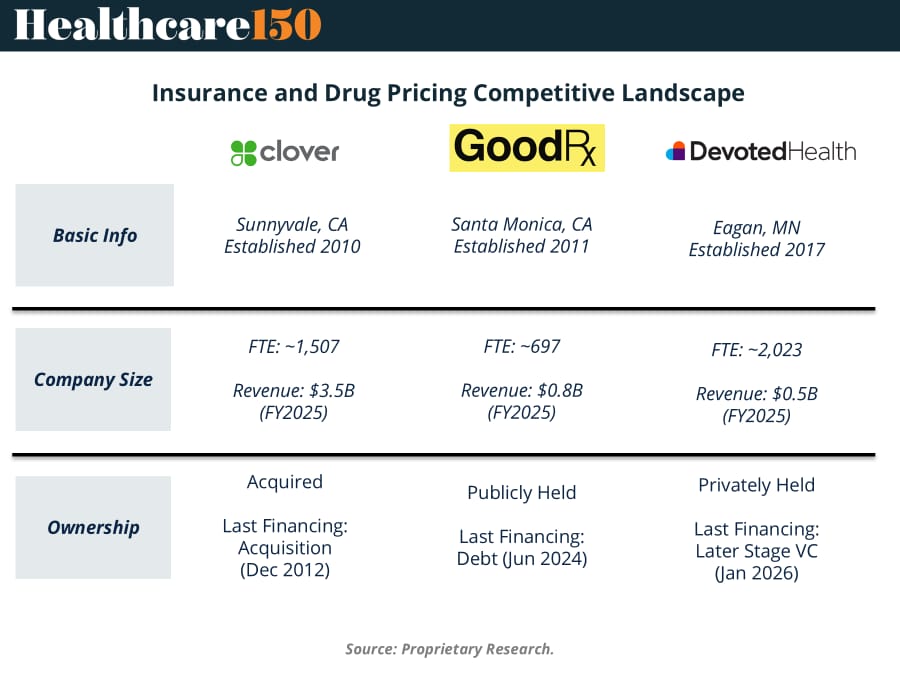
COMPETITIVE LANDSCAPE SNAPSHOT
TREND TO WATCH
Healthcare’s Operating System Reset

This isn’t a device boom—it’s a platform takeover.
The IoMT market is projected to scale from $225.8B to $2.29T by 2035—a near 10x expansion that signals a fundamental rewrite of healthcare delivery.
The drivers are structural. Remote patient monitoring is pushing care beyond hospital walls, while value-based care models are rewarding continuous, outcome-driven engagement. At the same time, real-time clinical data is becoming the core asset—fueling AI diagnostics and predictive care.
The key shift: devices are no longer endpoints—they’re data pipelines.
For investors, the opportunity is moving up the stack. Interoperability, cybersecurity, and care orchestration platforms are emerging as the real control points.
Bottom line: IoMT isn’t a category—it’s becoming healthcare’s operating system. (More)
“Success is walking from failure to failure with no loss of enthusiasm.”
Winston Churchill