- Healthcare 150
- Posts
- Why Digital Health Still Can't Scale Enterprise Wide
Why Digital Health Still Can't Scale Enterprise Wide
What prevents digital health companies from achieving enterprise scale, measles cases going through the roof in the US.

Gaston Brizuela Bosio
July 30, 2026

Good morning, ! This week we’re diving into what prevents digital health companies from achieving enterprise scale, measles cases going through the roof in the US, and North America remaining on top of deal count for the 1Q26.
Know someone in the healthcare space who should see this? Forward it their way. Here’s the link.
Join PE150 and Caplink for our AI & Data Insight Breakfast in London. Register here.
— The Healthcare150 Team

MICROSURVEY
Enterprise Scale Starts With the Customer
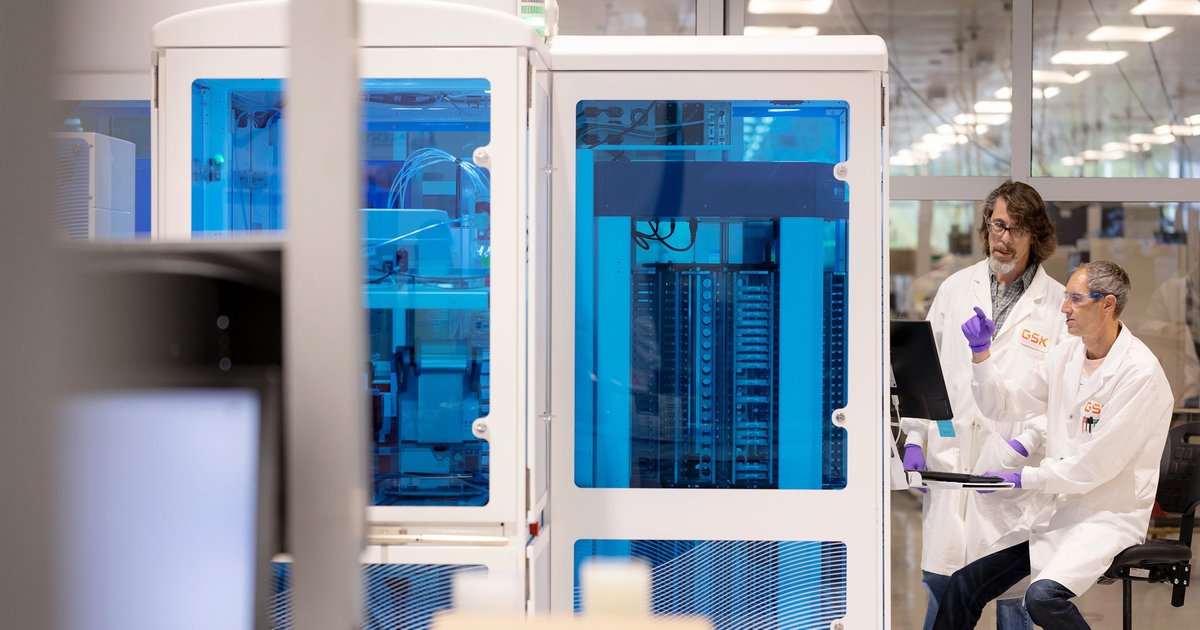
Healthcare founders often assume reimbursement or clinical validation is the biggest obstacle to growth. Our latest survey suggests otherwise. 39% of respondents identified navigating health systems as the primary barrier to reaching enterprise scale, ahead of 31% citing unclear clinical ROI and 30% pointing to weak reimbursement models.
The results highlight a commercial challenge rather than a technology problem. Even companies with strong clinical evidence face lengthy procurement cycles, fragmented decision-making, and complex integration requirements that can delay adoption by months or years.

For investors and operators, the implication is clear. Enterprise success increasingly depends on execution inside provider organizations, not simply product quality. The next generation of digital health winners will be those that reduce implementation friction, demonstrate measurable ROI, and fit seamlessly into existing clinical and operational workflows.
Bottom line: In digital health, scaling is becoming less about building better products and more about making them easier for health systems to buy, deploy, and sustain. (More)
You’re invited: Where AI Meets Private Equity

Artificial intelligence has moved beyond experimentation. The real question for private equity firms is no longer whether to adopt AI, but how to turn it into measurable value across the investment lifecycle.
On November 18, PE150 and CapLink Group will host the AI / Data & Insight Private Capital Breakfast, an invitation-only gathering at London's May Fair Hotel that will bring together operating partners, deal teams, portfolio executives, and technology leaders to discuss what AI adoption actually looks like inside private equity.
The morning will feature three practitioner-led discussions:
AI Into Value Creation — How leading firms are transforming AI from dashboards into repeatable value creation playbooks across portfolio companies. Sponsored by Exact Insight.
AI Across the Investment Lifecycle — Practical applications spanning sourcing, due diligence, investment decisions, and portfolio management.
Building the AI-Enabled Private Equity Firm — The operating models, data strategies, and organizational capabilities required to scale AI successfully.
Interested in attending? Register or request the full agenda here.
Interested in sponsoring? Email [email protected]
HEADLINE OF THE WEEK
The Return of Vaccine Preventable Disease
The U.S. has recorded 2,318 measles cases through July, the highest annual total in 35 years, despite the disease being declared eliminated in 2000. The resurgence is not simply an infectious disease story. It reflects a structural decline in vaccination coverage that is beginning to reshape public health risk.
National MMR vaccination among kindergarteners has fallen to 92.5%, below the 95% threshold required for herd immunity. In at least 16 states, coverage has dropped below 90%, creating localized conditions for sustained outbreaks. The burden is falling disproportionately on children, who account for 69% of reported cases, while 93% of infections occurred in unvaccinated individuals.
Why this matters now is broader than measles. Declining vaccine confidence increases the probability of future outbreaks, raises pediatric hospitalization costs, and places renewed pressure on immunization programs, health systems, and public health agencies. For healthcare executives and investors, vaccine uptake is becoming a leading indicator of preventable utilization, public health resilience, and demand for immunization infrastructure. If current trends persist, vaccine confidence may become as important to healthcare capacity planning as workforce shortages or reimbursement policy. (More)

DEAL OF THE WEEK
argenx doubles down on immunology with a ~$2.2B bet
argenx agreed to acquire Forte Biosciences for approximately $2.2B in cash, paying $77 per share, an 86% premium to the company's recent VWAP. The transaction brings FB102, a first-in-class anti-CD122 antibody with encouraging Phase 1b proof-of-concept data in vitiligo and celiac disease, into argenx's growing immunology franchise.
The acquisition is notable not only for its size, but for what it signals. Rather than licensing or extending an existing collaboration, argenx moved from strategic investor to full owner, securing complete control over a differentiated asset before it enters later-stage development. In today's biotech market, companies with compelling early clinical data continue to command premium valuations despite a more disciplined financing environment.
Why it matters: Large-cap biotech remains willing to pay aggressively for de-risked immunology assets. Expect competition for differentiated Phase 1/2 programs to remain intense as companies replenish pipelines ahead of upcoming patent expirations.

DEAL TRACKER
€1.5B | Gerresheimer → Apax Funds
Gerresheimer agreed to sell its Centor business and global primary plastic packaging operations to Apax, simplifying its portfolio while strengthening its balance sheet after recent accounting-related challenges. Read more
$1.27B | Avanos Medical → American Industrial Partners
AIP completed the take-private of Avanos Medical, adding a diversified portfolio of pain management, respiratory, and digestive health devices to its healthcare platform. Read more
~€700M | Numantec → Goldman Sachs Alternatives
Goldman Sachs Alternatives agreed to acquire Italian medtech manufacturer Numantec, continuing the consolidation of specialized medical equipment manufacturers with scalable manufacturing footprints across Europe and the US. Read more
€257M | Biofarm → Polpharma Group
Polpharma completed the acquisition of Romania's Biofarm, strengthening its Central and Eastern European pharmaceutical platform with more than 100 marketed products across 60 therapeutic areas. Read more
Also worth watching: Included Health's acquisition of Firefly Health (undisclosed), as employers continue to back AI-native, value-based primary care platforms.

REGIONAL FOCUS
North America Tightens Its Grip on Healthcare M&A
North America remained the clear center of healthcare dealmaking in 1Q2026, recording 436 transactions, including 408 in the U.S. and 28 in Canada. By comparison, Europe generated 247 deals, while Asia recorded 92, reinforcing that the deepest pools of healthcare capital continue to reside in North America.

Within the U.S., activity remains broadly distributed rather than concentrated in a single market. The Southeast led with 88 transactions, followed by the Mid-Atlantic (76) and West Coast (71). The Great Lakes recorded 46 deals, while all other regions collectively accounted for 127, highlighting the breadth of sponsor activity across the country.
The regional split reflects more than population growth. Healthcare M&A continues to follow markets with dense provider networks, favorable demographic trends, established referral ecosystems, and scalable platform opportunities. For investors and lenders, geography has become an underwriting variable rather than a footnote. Local payer dynamics, workforce availability, and state-level regulation increasingly determine valuation, financing capacity, and post-acquisition performance. As healthcare delivery becomes more localized, regional expertise is emerging as a durable competitive advantage. (More)