- Healthcare 150
- Posts
- $9.9M HIPAA Fines, 50% Integration Pain, 78% Betting On AI
$9.9M HIPAA Fines, 50% Integration Pain, 78% Betting On AI
78% of leaders turn to AI for efficiency and $9.9M in HIPAA fines signals tougher enforcement, while integration complexity stalls virtual care for 50%.


Good morning, ! This week we’re breaking down why healthcare compliance is getting more punitive, how virtual care’s biggest bottleneck is integration, with 50% of providers citing it as the top barrier, and why AI is becoming a cost weapon, as 78% of biopharma and medtech leaders bet on it for efficiency by 2026, even as just 14% have fully deployed it today.
Sponsor Spotlight: Whereby is a video call API for telehealth platforms that enables embedded virtual visits with reliability, compliance, and UX control at scale.
Their State of Virtual Care survey highlights what’s actually stalling adoption as virtual care becomes infrastructure, and the benchmarks leaders are using to prioritize trust and experience in 2026. Read report highlights →
— The Healthcare150 Team
THIS WEEK’S TREND
The 2026 Cost Playbook
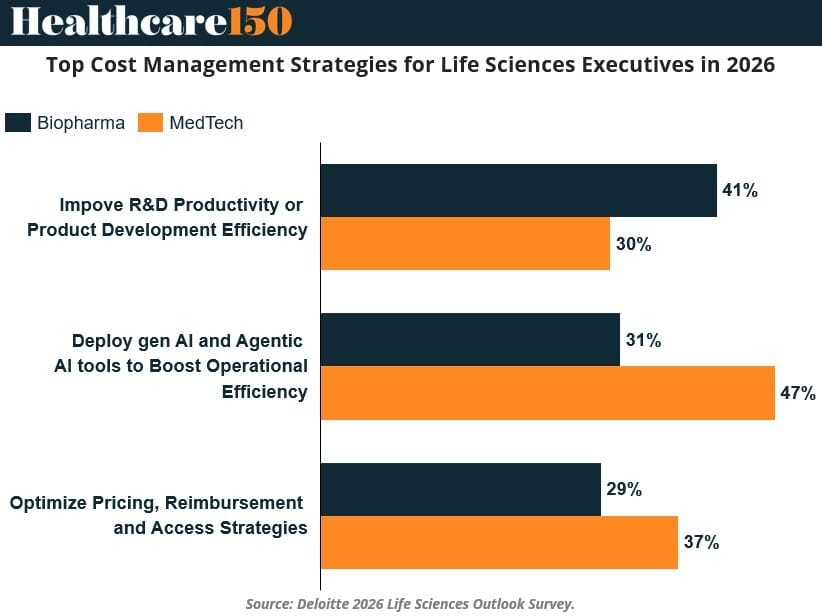
Cost containment is no longer a side conversation in life sciences—it’s a strategic imperative. In a recent executive survey, 78% of biopharma and medtech leaders cited AI as central to driving efficiency by 2026. But while ambition is high, execution lags: only 14% have fully implemented AI into workflows; 40% are still scaling.
For biopharma, R&D productivity is the cost lever of choice—understandable in a world where bringing a drug to market now costs $2B+. Medtech, on the other hand, is betting on operational efficiency, with nearly half prioritizing AI as their top cost tool.
But cost strategy in 2026 goes beyond tech. Zero-based budgeting (ZBB) is gaining traction, especially as price compression, regulatory headwinds, and portfolio complexity mount. Despite its reputation, ZBB isn’t just about cuts—it’s about clarity. Companies that adopt it well are freeing capital to reinvest in growth areas like AI, launches, and digital commercial models.
Why it matters: The winners in 2026 won’t be the lowest spenders—they’ll be the smartest allocators. For investors and operators, the signal is clear: AI and ZBB aren’t cost tools; they’re competitive weapons. (More)
PRESENTED BY WHEREBY

Virtual care is becoming the backbone of modern healthcare. But access and delivery are only the beginning. The real challenge is building virtual care systems people can trust, and that work reliably at scale.
In Whereby’s State of Virtual Care survey, telehealth leaders highlight the same pressure points that slow adoption: keeping patients engaged, building trust, and delivering a smooth experience without technical issues.
Whereby, a video call solution for telehealth platforms, pulled the key findings into a practical set of benchmarks you can use to check priorities for 2026.
Supporting our sponsors supports our free newsletters. Please support our sponsors!
COMPETITIVE LANDSCAPE SNAPSHOT
HEALTHTECH CORNER - Brought to you by Whereby
Virtual Care’s Real Bottleneck Is Integration, Not Demand
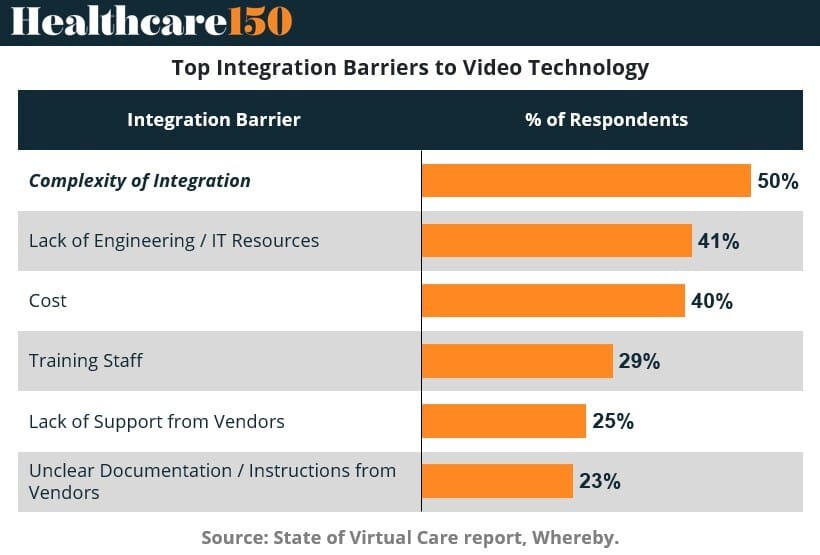
Virtual care adoption has hit a new constraint, and it is not demand. It is execution. New data from Whereby’s State of Virtual Care report shows that 50% of healthcare organizations cite integration complexity as the top barrier to embedding video into care workflows. Another 41% point to lack of engineering or IT resources. This is a clear signal that virtual care is no longer an access problem. It is an infrastructure problem.
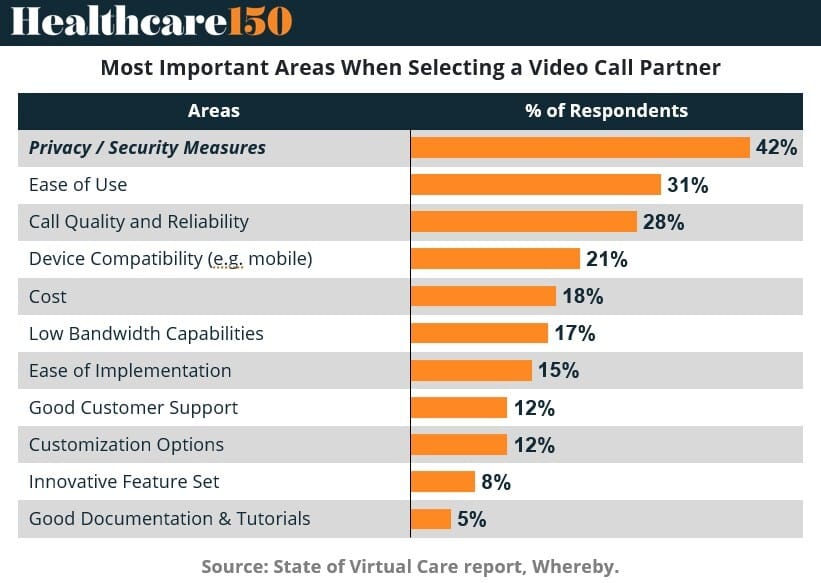
At the same time, buyer priorities are tightening. When selecting a video partner, 42% of respondents rank privacy and security compliance as the single most important factor, ahead of ease of use at 31% and call reliability at 28%. Cost ranks just 18%, underscoring that risk mitigation now outweighs price sensitivity.
The implication for healthcare leaders and investors is direct. Platforms that reduce integration friction while meeting enterprise-grade security requirements are positioned to win as virtual care shifts from experimentation to embedded infrastructure. For vendors like Whereby, simplicity and compliance are no longer features. They are the growth lever.
COMPLIANCE CORNER
Privacy, Security, and Sharing—Now Enforced Together
Healthcare compliance is entering a more punitive phase. In 2024, HHS OCR stepped up HIPAA Security Rule enforcement, issuing $9.9 million in penalties across 22 actions—many tied to basic risk analysis failures and ransomware incidents. Delayed patient access to records didn’t help.
At the same time, HHS finalized information blocking disincentives under the 21st Century Cures Act. Providers and payers that impede EHI exchange now risk losing Medicare market-basket updates or MIPS points. Enforcement is no longer theoretical—and investigations are increasingly coordinated.
Layer in CMS interoperability mandates, including FHIR-based APIs and expanded payer-to-payer data sharing, and the compliance bar rises again.
The message is clear: cybersecurity rigor, interoperability governance, and timely patient access are no longer separable. Miss one, and regulators will find the others. (More)
Whereby helps telehealth platforms deliver embedded video that feels native, with the reliability and UX control needed to scale virtual care.
Supporting our sponsors supports our free newsletters. Please support our sponsors!
"It is not the strength of the body that counts, but the strength of the spirit."
J.R.R. Tolkien